
THE QUESTION OF THE MILITARY MASS
S.E.M. Jure VUJIC[1]
Executive Summary: In the context of the conflict in Ukraine, Russia is strengthening its military presence near the Finnish border, now a member of NATO, and in response NATO is strengthening its military presence in the eastern countries. The Russian threat perceived by Western countries would be directed towards the Baltic States, separated from Poland by the Suwałki corridor, a crucial strategic area. This dynamic is part of a broader context of geopolitical rivalries in the Arctic, where joint military exercises between the United States, Finland and NATO simulate conflicts with Russia, which also considers the area strategic for its defence. Historically, the Great North War (1700-1721) between Sweden and Russia illustrates the strategic importance of the military mass, a principle still relevant today, and the question remains as to whether recent Russian troop concentrations are announcing a new Great North War. The war in Ukraine shows that, despite technological advances, the amount of troops and equipment remains crucial. However, military success still depends on a variety of factors, including strategy, leadershiptraining and morale of troops, particularly in protracted conflicts. NATO, for its part, relies on automation and drones to compensate for its lack of military mass.
Keywords : Arctic, Ukraine War, Russia, Finland, NATO, Suwałki Corridor, Geopolitics, Geostrategy, Defense, Great North War, Attrition War, Technology, Automation, Drones, Military Mass.
TOWARDS A NEW GREAT NORTHERN WAR ?
THE QUESTION OF MILITARY MASS
Abstract : In the context of the conflict in Ukraine, Russia is strengthening its military presence near the border with Finland, now a NATO member, and in response, NATO is strengthening its military presence in Eastern Europe. The Russian threat perceived by Western countries is, according to them, directed towards the Baltic states, separated from Poland by the Suwałki Corridor, a crucial strategic area. This dynamic is part of a broader context of geopolitical rivalries in the Arctic, where joint military exercises between the United States, Finland, and NATO simulate conflicts with Russia, which also considers this area strategic for its defense. Historically, the Great Northern War (1700–1721) between Sweden and Russia illustrates the strategic importance of military mass, a principle still relevant today, and it remains an open question whether recent Russian troop concentrations herald a new Great Northern War. The war in Ukraine shows that, despite technological advances, the quantity of troops and equipment remains crucial. However, military success still depends on multiple factors, including strategy, leadership, training, and troop morale, especially in protracted conflicts. NATO, for its part, is relying on automation and drones to compensate for its lack of military mass.
Key words : Arctic, Ukrainian War, Russia, Finland, NATO, Suwalki Corridor, Geopolitics, Geostrategy, Defense, Great Northern War, War of Attrition, Technology, Automation, Drones, Military Mass.
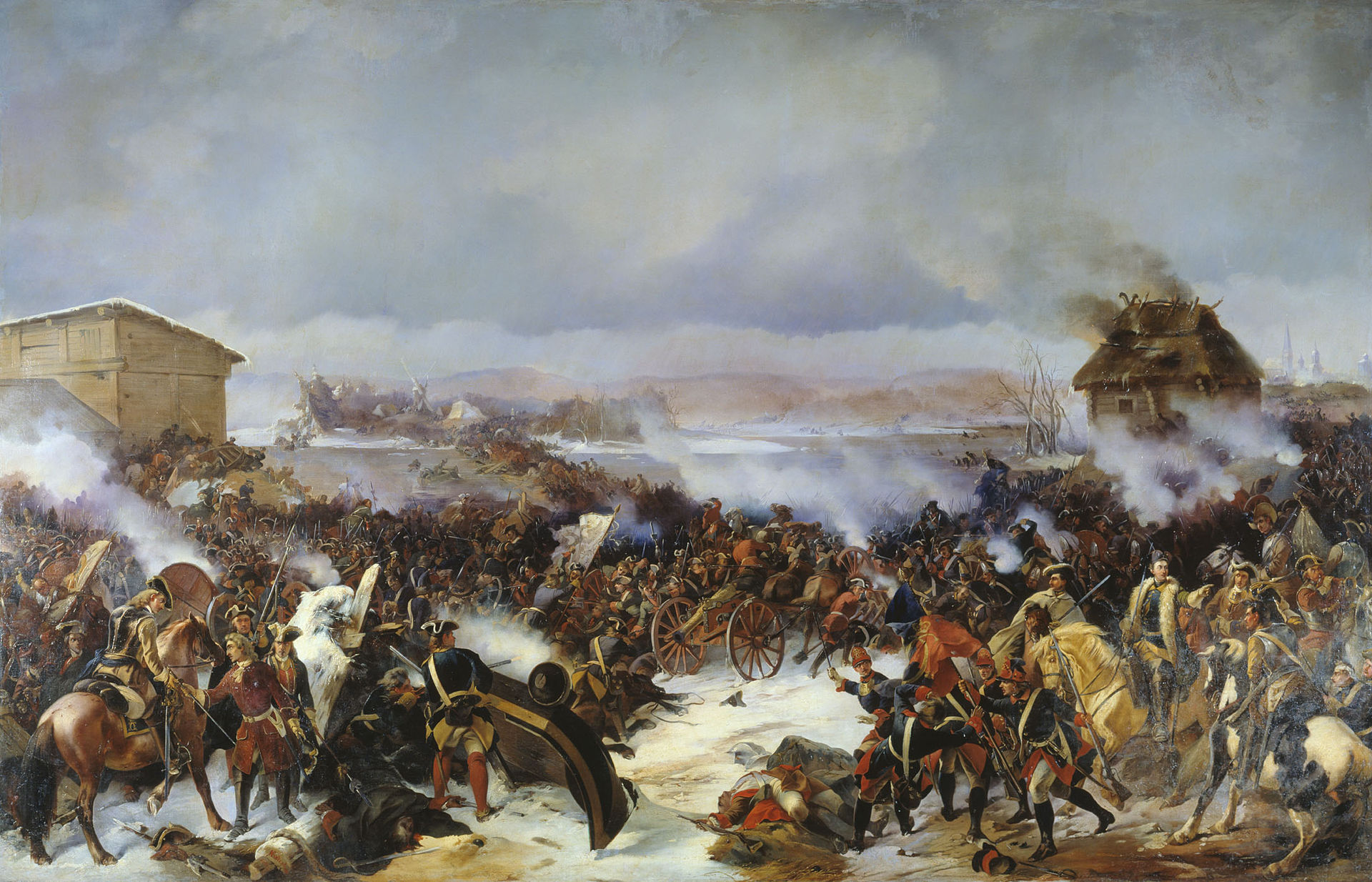
The Battle of Narva (1700)[2]
ALSO AS THE COMBATE BETWEEN RUSSIAN AND LUKRAINE continues on the eastern front in the Donbass (Donetsk region) with considerable losses in both camps, Russia, according to the latest intelligence analysis, would strengthen its military presence near the border with Finland in recent months, one of the last two that – together with Sweden – joined NATO.
In fact, the installation of new warehouses for military vehicles or shelter for fighter aircraft as in the Petrozavodsk region, were identified by satellite images. North of the polar circle, Severomorsk-2, a helicopter base, is being renovated. Closed in 1998, this base was reactivated in 2022.
Even if the situation is not comparable to that of February 2022 before the start of the “special operation” in February 2022, when Russia had conducted a high concentration of troops, this military activity accumulating along the Finnish border with a development of military infrastructure, seems to predict a possibility of concentration of Russian troops towards the Western front.
NATO, for its part, is strengthening its military presence in the eastern part of its territory by establishing multinational tactical groups in Bulgaria, Estonia, Hungary, Latvia, Lithuania, Poland, Romania and Slovakia. They also sent more ships, aircraft and soldiers across NATO’s eastern flank. In July 2024, Latvia became the first country to strengthen NATO’s advanced presence on its soil by forming the NATO-Latvia multinational brigade. In May 2025 Germany officially inaugurated the multinational brigade which it runs in Lithuania. Indeed, the Alliance believes that the threat of a potential Russian invasion over the next five years is concentrated in the Baltic States which, although close to other Alliance countries, are separated from Poland to the west by the Suwałki corridor. This strip of land, just 65 kilometers long, connects the Russian exclave of Kaliningrad of Belarus, a state de facto Moscow vassal. This corridor would be at the heart of the Russian military operation if the Baltic States were attacked.
For Moscow, and as part of its “border locking strategy”, it is a highly strategic area for the defence of the St Petersburg region, while the border with Finland, which is more than 1,300 km long, is the longest line of contact between NATO and Russia. For example, Russia is strengthening its military capabilities on this border, in order to ensure a strong defence and in case of war with NATO and the Baltic countries, it intends to lock up the Murmansk peninsula where Russian nuclear forces and the northern fleet are stationed, which would automatically be attacked by Finland. This strengthening of Russian military infrastructure on the western border is also part of the broader geopolitical rivalries in the Arctic between Russia, Europe and the United States.
Recently, the US and Finnish armies organized a large-scale joint military exercise in the region, simulating a conflict with Russia. In November, thousands of NATO soldiers participated in a large-scale artillery exercise in the Finnish Arctic. Indeed, the economic potential of the Arctic, with the opening of new sea routes, is at the centre of the geostrategic challenges that have given the North Atlantic, the Arctic and the Baltic the strategic importance they had in the cold war.
Baltic control in the centre of the Great North War
It is true that for Russia the strategic interest of this Arctic area and the Baltic Sea is a constant in its military and geopolitical doctrine, which explains this redistribution of the Russian military mass towards the north-west border along the Finnish border.
This strategic continuity was repeatedly confirmed by history and found a perfect illustration in the Great Northern War, which took place from 1700 to 1721 between Russia and Sweden, during the reign of Peter I.er of Russia (Peter the Great)[3]. It should be recalled that one of the main causes of the war was the desire of Peter the Great to acquire territory on the Baltic Sea and to have access to the Black Sea. Many battles took place for 21 years, and Russia finally defeated Sweden at the Battle of Poltava in 1709, although a formal peace treaty was not signed until 1721. After the Russian failure of the siege of Narva, against the Swedish armies of Charles XII, Peter the Great had to rebuild and reorganize his army, and that is the number and the military mass that was at the origin of the Russian victory at the battle of Poltava (present-day Ukraine) in 1709, which was a decisive battle of the Great Northern War.[4].
History’s irony, today, is the city of Narva which is at the center of the attention of the West, and which could serve as an alibi for the entry of Russian troops into the territory and Estonia. Therefore, alongside the recent acquisition of HIMARS, Estonia has launched large-scale defence and evacuation exercises, called KILP, in Ida-Viru County, its easternmost border region of Russia. These exercises simulate a local uprising that degenerates into a wider conflict.
The question of the military mass in the light of the war in Ukraine
Since Sun Tzu, Carl von Clausewitz, Edward Luttwak, until today, many strategies have shown the importance of the mass principle in war, the ability to pool its forces and resources to win. Napoleon is remembered, for which the strategic force results from: ” the mass multiplied by the speed ” Of course, although it is often justified as promoting the quality of high technology relative to quantity, the reduction of operational “mass” remains a concern. For example, the war in Ukraine suggests that combat platforms remain vulnerable in a high-intensity war. Russia itself could testify: according to the Ukrainian armed forces, the Russian army may have lost 1500 tanks, 3600 armoured vehicles, 750 artillery pieces and 210 aircraft between the beginning of the invasion and the end of June 2022.
The high-intensity conflict in Ukraine, which combines sometimes archaic conventional elements of conventional trench war with a high-tech dronic war, also demonstrates the importance of human capabilities and the volume of weapons involved in the takeover of territories. There is also a demonstration of the destructive force of the Russian compressor roller, of its famous “meat chopper” engaged in battles with its capacity to renew infantrymen, thanks to an important human reservoir. Europe has become aware of its failure and weakness in terms of military mass, which it is trying to absorb with accumulated financing and production plans. The war in Ukraine also demonstrates the high rate of weapons consumption and the need to maintain a constant industrial production of weapons and ammunition on both sides, as well as the need to move to a “war economy” to deal with these problems.
Let us not forget that since the strategic theses of Marshal Tukhachevski, who has taken advantage of Alexander Svechin[5] In the Russian General Staff of the time (between two world wars), which advocated the neutralisation of the enemy by sideration and its disorganization in depth, Russia has a long strategic attritional tradition, with a capacity to mobilize and concentrate the military mass over the long term.
After that, the failure of the Russian operation of February-March 2022 in Ukraine, which relied on a rapid movement war to take control of Kiev and separate it as a political centre from their army stationed in Donbass, succeeded a long war attrition waged by Russia with heavy consumption of men and equipment. It is estimated that Russian forces in Donbass rely on a capacity of at least 100,000 shells per day. Even though the Ukrainian army is technically and tactically superior with a great ability to adapt, this superiority does not materialize in the mass necessary to achieve rapid victories. The wars of the future will inexorably be wars at a distance, through intermediaries ” proxy and are condemned to go through attrition, with the accumulated use of drones and satellites combined with a duel of artillery of all litters. Nevertheless, the outcome of the wear and tear wars will depend on the ability to mobilize throughout a long confrontation, as well as the resolution and morale of the military masses.
Technological shield and paralyzing mass
High military technology, represented weapons systems and communication technologies, the robotic and dronic revolution in the military field, have changed the way in which war is thought and prepared, and it is a decisive factor in the operational superiority of modern armies, but it cannot, in the long run, in a long-term war of attrition, replace the human element, the number and the military mass. This is one of the reasons why new Western strategies and doctrines are moving towards an operational approach ” High-Low Mix ensuring balance between mass and technology. The technological shield, which today constitutes the deterrence of nuclear weapons, does not constitute a miracle remedy that inhibits external aggression, and even if technological advances provide the advantage of attacking the defender, the importance of the military mass and the volume of weapons, especially in “long wars”, should not be underestimated.
Technology has thus become another crucial factor in the operational superiority of modern armies. Retained weapons systems and communication technologies can offer considerable benefits on the battlefield. These technologies can improve the accuracy and range of weapons, provide better situational awareness and allow faster response times. In the end, military success will always depend on a series of factors, including strategy, leadershipTraining and morale. A technologically advanced army that does not possess these other qualities can be disadvantaged compared to a more cohesive and motivated opponent, even if it has a larger volume of forces.
The concept of mass is at the heart of the strategy, which is the art of directing the masses well in the theatre of war. The question of the dilemma between mass and technology gives rise to many debates and divides strategic thinking. Clausewitz and Liddle Hart oppose the mass. For the first, “le is the general principle of victory, both in strategy and tactics ” The second finds the mere quantitative factor insufficient to take the decision alone. For General Pierre-Marie Gallois, during the Cold War, ” the state of the arsenals and the strategy of the means »[6].
In order to reduce the phenomenon of attrition and depletion of human resources in high-intensity conflicts, some analysts propose to optimize the ratio between gross mass and operational mass, in order to achieve better synchronization of military effects at a decisive point. Even if there are deep breaks in the security paradigms of the XXIème With the challenges of artificial intelligence (AI), robotics, biotechnology, hypersonic weapons and directed energy weapons, the importance of cognitive, psychological and moral factors and the degree of motivation of the military mass should not be underestimated in the context of long-term wars. On the other hand, it will be necessary to take into account the weightables of military cultures on how operations are designed and implemented, and their ability to adapt to hybrid and complex environments.
The mass not only has an operational dimension in the sense of gross mass but, as Elias Canetti has shown,[7]It certainly has a psychological dimension, since it provides a feeling of emotional infallibility, and can cause by its volume and ability to renew itself, a sideration effect (as is the case in the trench war in Ukraine) and a tragic paralysis effect. Indeed, the “double mass” generates the consciousness of belonging to one mass opposite to another, that is, the collective identity consciousness; what Canetti is[8] calls for strategic identity consciousness. In fact, this paralysis generated by the wasting of human lives and permanent offensive, would paradoxically be to the antipode of the conception of the great strategists such as J.F.C. Fuller and Liddell Hart of strategic paralysis, which implies a principle of saving military forces: ” The most decisive victory has no value if it took the nation to bleed out to get ».
Of course, the historical and military context of the Great North War, which contrasted Sweden with the Russia of Peter the Great, was quite different from the contemporary configuration of high-intensity distance wars, both conventional and technological (satellites and drones). Nevertheless, this 21-year long Great North War, punctuated by a series of battles and campaigns, did not escape the phenomenon of attrition and the decisive factor of mass mobilization.
At present, no one knows whether the latest concentration of troops of the Russian army and the construction of real garrison towns along the Russian-Finnish border constitute the warning signs of border closure or preparations for a new great war in the North, from which Russia has emerged victorious thanks to the superiority of its army. The West seems to take the threat seriously and reinforces its military presence in the region, by putting this time, thanks to robotic drones, on the automation of military forces, able to overcome the weakness of its military mass.
References:
– Canetti Elias, Mass and power, Paris, Gallimard, 1986 (1era parution en 1966), 532 p.
– Frost Robert I., The Northern Wars : War, State and Society in Northeastern Europe, 1558-1721, Harlow, Pearson Education Limited, 2000, 417 p., lien : https://prussia.online/Data/Book/th/the-northern-wars/Frost%20R.%20The%20Northern%20Wars.%20War,%20State%20and%20Society%20in%20Northeastern%20Europe,%201558-1721%20(2000)%20v2,%20OCR.pdf (accessed 3 July 2025).
– Managed François, Dictionary of strategic thinking, Paris, Larousse, 2000, 318 p.
– Heller Michel, “3 – The North War”, in History of Russia and its Empire, Paris, Perrin, 2015, pp. 619-659 (1504 p.), lien : https://shs.cairn.info/histoire-de-la-russie-et-de-son-empire–9782262064358-page-619?lang=fr (accessed 3 July 2025).
– Joxe Alain, “Canetti strategist: fear of the other, war and democracy”, in Austria: University Papers on Austria, N°61, 2005, pp. 29-35, lien : https://www.persee.fr/doc/austr_0396-4590_2005_num_61_1_4485 (accessed 3 July 2025).
– Kotzebue Alexandre (von), Battle of Narva 1700 (peinture historique), 1850, lien : https://fr.wikipedia.org/wiki/Bataille_de_Narva_(1700)#/media/Fichier:Battle_of_Narva_1700.JPG (accessed 3 July 2025).

– Lastours Sophie (de), Tukhachevski, the builder of the Red Army, Paris, Albin Michel, 1996, 336 p.
– Toutain Xavier, “Return of High Intensity: How to Solve the Dilemma between Mass and Technology?” in National Defence Review, Off-series No. 2021/HS4, pp. 15-28, link: https://shs.cairn.info/revue-defense-nationale-2021-HS4-page-15?lang=fr&tab=resume (accessed 3 July 2025).
[1] Franco-Croatian geopolitician, director of the Institute of Geopolitics and Strategic Research in Zagreb (Croatia), member of the Scientific Council and associate researcher at the Academy of Geopolitics in Paris, contributor to the journal GeostrategicMinister Plenipotentiary at the Croatian Embassy in France. He is the author of Geoconstructivism. The art of making and undoing states published in 2022.
[2] Kotzebue Alexandre (von), Battle of Narva 1700 (peinture historique), 1850, lien : https://fr.wikipedia.org/wiki/Bataille_de_Narva_(1700)#/media/Fichier:Battle_of_Narva_1700.JPG (accessed 3 July 2025).
[3] Heller Michel, “3 – The North War”, in History of Russia and its Empire, Paris, Perrin, 2015, pp. 619-659 (1504 p.), lien : https://shs.cairn.info/histoire-de-la-russie-et-de-son-empire–9782262064358-page-619?lang=fr (accessed 3 July 2025).
[4] Frost Robert I., The Northern Wars : War, State and Society in Northeastern Europe, 1558-1721, Harlow, Pearson Education Limited, 2000, 417 p., lien : https://prussia.online/Data/Book/th/the-northern-wars/Frost%20R.%20The%20Northern%20Wars.%20War,%20State%20and%20Society%20in%20Northeastern%20Europe,%201558-1721%20(2000)%20v2,%20OCR.pdf (accessed 3 July 2025).
[5] Managed François, Dictionary of strategic thinking, Paris, Larousse, 2000, 318 p. ; Lastours Sophie (de), Tukhachevski, the builder of the Red Army, Paris, Albin Michel, 1996, 336 p.
[6] Toutain Xavier, “Return of High Intensity: How to Solve the Dilemma between Mass and Technology?” in National Defence Review, Off-series No. 2021/HS4, pp. 15-28, link: https://shs.cairn.info/revue-defense-nationale-2021-HS4-page-15?lang=fr&tab=resume (accessed 3 July 2025).
[7] Joxe Alain, “Canetti strategist: fear of the other, war and democracy”, in Austria: University Papers on Austria, N°61, 2005, pp. 29-35, lien : https://www.persee.fr/doc/austr_0396-4590_2005_num_61_1_4485 (accessed July 3, 2025) And: Austria: University Papers on Austria (« Elias Canetti à la Bibliothèque nationale de France »), N°61, 2005, link : https://www.persee.fr/issue/austr_0396-4590_2005_num_61_1?sectionId=austr_0396-4590_2005_num_61_1_4485 (accessed 3 July 2025).
[8] Canetti Elias, Mass and power, Paris, Gallimard, 1986 (1era parution en 1966), 532 p.
Leave a comment