
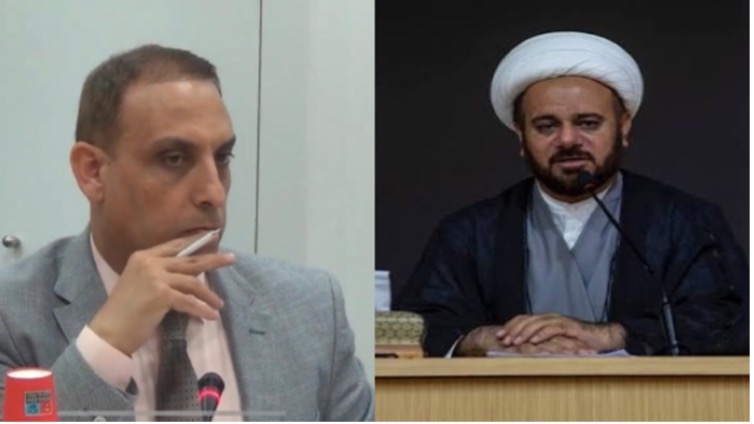
Prof. Qais Nasir RAHAI[1]
Et Prof. Abbas Atiyah Abbed AL-QURAISHI[2]
[1] Le Dr Qais Nasir Rahai est chercheur au Département d’études politiques et stratégiques du Centre d’études de Bassorah et du Golfe de l’Université de Bassorah. Il est également chercheur universitaire affilié au Centre irakien de documentation des crimes extrémistes, où il a publié de nombreux articles sur les archives du parti Baas irakien, soulignant la nécessité pour les chercheurs irakiens d’étudier ces précieuses sources historiques en Irak.
[2] Le Dr Abbas Al-Quraishi est professeur à l’Université de Kufa et dirige également le Centre irakien de documentation des crimes extrémistes.
Résumé : Cette recherche vise à étudier les crimes commis par les terroristes contre les minorités nationales religieuses en Irak, en prenant les Shabaks chiites comme étude de cas. Les crimes commis contre eux sont généralement basés sur la croyance, le déplacement forcé, le génocide, l’ethnocide, les enlèvements, les meurtres et la prise d’otages. La recherche s’intéresse à un sujet qui n’a pas reçu suffisamment d’attention en matière de documentation et d’étude, à savoir une minorité nationale religieuse divisée entre musulmans chiites, qui sont la majorité, et un petit nombre de musulmans sunnites. Les Shabaks ne se trouvent qu’en Irak, notamment dans la province de Mossoul, au nord de l’Irak. De plus, la recherche aborde ces crimes en suivant une méthode descriptive et analytique, tout en se concentrant sur le contexte historique de la violence subie par ce groupe, qu’il s’agisse de violence structurelle, incarnée dans la violence culturelle, ou de violence fondée sur la nationalité et la confession, perpétrée par le régime Ba’ath (ou Baas) avant 2003, puis transformée en violence confessionnelle après 2003.
Mots-clés : Crimes terroristes, Shabaks chiites, Irak, Minorités nationales religieuses, Histoire, Sciences politiques, Terrorisme, Droits de l’Homme.
TERRORIST CRIMES COMMITTED AGAINST NATIONAL RELIGIOUS MINORITIES IN IRAQ: THE SHIITE SHABAKS AS A CASE STUDY
Abstract : This research aims to study the crimes committed by terrorists against national and religious minorities in Iraq, using the Shia Shabak community as a case study. The crimes committed against them are generally based on their religious beliefs and include forced displacement, genocide, ethnocide, kidnappings, murders, and hostage-taking. The research focuses on a subject that has not received sufficient attention in terms of documentation and study, namely a national and religious minority divided between Shia Muslims, who constitute the majority, and a small number of Sunni Muslims. The Shabak people are found only in Iraq, particularly in the Mosul province in northern Iraq. Furthermore, the research addresses these crimes using a descriptive and analytical method, while focusing on the historical context of the violence suffered by this group, whether it be structural violence, embodied in cultural violence, or violence based on nationality and religious affiliation, perpetrated by the Ba’ath regime before 2003, and then transformed into sectarian violence after 2003.
Key words : Terrorist crimes, Shiite Shabaks, Iraq, National religious minorities, History, Political sciences, Terrorism, Human rights.
Introduction
APRÈS 2003, LE SYSTÈME POLITIQUE IRAKIEN a reconnu que l’Irak est un pays multiethnique, multi-religieux et multiconfessionnel, conformément à l’article 3 de la Constitution de 2005. L’article 4 de cette Constitution garantit également le droit des Irakiens d’enseigner à leurs enfants, dans les établissements éducatifs privés, les langues officielles arabe et kurde, ou leur langue maternelle, ou toute autre langue. L’article 14 stipule que tous les Irakiens sont égaux devant la loi, sans distinction de sexe, de race, de nationalité, d’origine, de couleur, de religion, de secte, de croyance, d’opinion, de statut économique ou social[1]. Ces processus constitutionnels sont le résultat des souffrances des communautés irakiennes sous le régime de Ba’ath[2] avant 2003 et de sa politique d’exclusion. L’une de ces communautés qui a souffert sous le régime de Ba’ath est celle des Shabaks. Ils ont été marginalisés en raison de leur nationalité, car la nationalité shabak n’a pas été reconnue, et l’identité arabe leur a été imposée. Ceux qui ont choisi l’identité kurde ont subi le même sort que les Kurdes en Irak, y compris le déplacement forcé. De même, ceux qui ont choisi l’identité arabe ont subi les mêmes exclusions, les mêmes dominations et violations des droits de l’homme qu’ont subi les chiites en Irak avant 2003.
Les Shabaks constituent la quatrième plus grande communauté en Irak après les Arabes, les Kurdes et les Turkmènes. Ils sont des natifs de l’Irak et ils ont enduré ce qu’ont enduré les autres communautés, et ont partagé avec elles les joies et les peines. Cependant, malgré cette reconnaissance, cela n’a pas empêché les groupes terroristes de commettre des crimes contre ceux qui s’opposent à eux en matière de religion, comme les chrétiens et les Yézidis, ou contre les chiites, dont le point de divergence est confessionnel. D’autres minorités religieuses et nationales ont également été ciblées. Certaines minorités irakiennes combinent à la fois une identité nationale et religieuse, comme les Turkmènes chiites et les Shabaks chiites.
Objectif de la recherche
L’objectif de cette recherche est d’étudier les crimes commis par les terroristes contre les minorités nationales religieuses en Irak, en prenant les Shabaks chiites comme étude de cas. Les crimes terroristes contre eux incluent le déplacement forcé, le génocide, l’ethnocide, les enlèvements, les meurtres, les prises d’otages et les crimes basés sur la croyance.
Problématique de la recherche
La problématique de cette recherche réside dans l’étude d’un sujet qui n’a pas reçu plus d’attention en termes de documentation et d’étude, à savoir une minorité nationale religieuse – les Shabaks chiites – dont les citoyens sont répartis entre les musulmans chiites, qui représentent environ 70 %, et les musulmans sunnites.
Méthodologie de la recherche
La méthodologie de cette recherche repose sur la description et l’analyse, en se concentrant sur l’étude du contexte historique de la violence subie par cette communauté, qu’il s’agisse de violence structurelle, incarnée dans la violence culturelle, ou de violence fondée sur la nationalité et la religion, qui s’est transformée ultérieurement en violence confessionnelle. Cette approche a permis de diviser les sujets de la recherche, en étudiant la violence structurelle représentée par la violence culturelle, et le sujet des crimes du régime baathiste contre les Shabaks comme un contexte historique, pour parvenir aux crimes de terrorisme contre les Shabaks chiites.
1 – Violence structurelle
Le chercheur pense qu’il existe une forme de violence exercée contre les Shabaks, liée à la culture qui s’est formée à leur sujet à travers les études et les écrits, ainsi que les idées qui circulent d’une manière orale, lesquelles ne représentent pas la responsabilité d’une personne spécifique, mais plutôt des méthodes suivies. La violence structurelle est « la violence qui se produit sans qu’il y ait un acteur clair et visible, et qui est inhérente à la structure même de la société »[3].
Cela a largement contribué à façonner une image que se font les lecteurs pour connaître les Shabaks. Personnellement, lorsque j’ai lu certains livres – qui expriment une vision sociale courante – je ne les ai pas trouvés justes lorsqu’ils parlent des Shabaks, que j’ai fréquenté pendant une période non négligeable. Il est donc nécessaire de décrire ces écrits et de montrer que leurs auteurs ne sont pas des promoteurs de violence, mais leurs écrits ont créé chez le lecteur qui ne connaît pas les Shabaks une image différente de leur identité et de leur appartenance.
Les Shabaks eux-mêmes reconnaissent que certains chercheurs ont empiété sur leurs droits et méprisé leurs croyances. Pour cela, le chercheur n’entrera pas dans les détails des croyances des Shabaks et de ce qui a été écrit à leur sujet, car cela fait l’objet de divergences parmi les chercheurs, qui s’appuient sur différentes sources afin de collecter leurs informations. Par exemple, le livre Les Shabaks, écrit par Ahmed al-Sarraf, s’appuie sur une seule interview pour formuler ses opinions. On peut donc dire que l’image ou la lecture qui s’est formée des Shabaks se divise en deux catégories : la première est neutre, rapportée par les Shabaks eux-mêmes et des chercheurs comme Zuhair Kazem Aboud et d’autres ; une seconde, qui est excessive et exprime la violence structurelle.
1 – 1 : La première image des Shabaks
Les chercheurs divergent sur l’origine des Shabaks. Certains les rattachent à des origines perses, d’autres à des origines turques, d’autres à des origines kurdes ou encore à un mélange de plusieurs ethnies, selon un quatrième avis. Les Shabaks chiites vénèrent les Mausolées des Imams qui se trouvent à Karbala, à Najaf, à Kadhimiya et à Samarra, et ils leur rendent visite lors de leurs célébrations religieuses, et organisent les rituels husseinites durant le mois de Muharram[4], qui est d’une importance particulière pour eux. Ainsi, ils accomplissent le pèlerinage à la Mecque[5].
Il n’y a aucun village sans qu’il ne contienne une mosquée ou une hussayniyya[6] où sont accomplies les cinq prières quotidiennes et célébrées les occasions religieuses comme les anniversaires de naissance des imams et les fêtes islamiques. La construction des mosquées remonte au milieu du XXème siècle, après l’amélioration de la situation économique des Shabaks et grâce aux efforts des autorités religieuses chiites, notamment Sayyid Mohsen al-Hakim, dont le rôle avait son impact dans cette démarche. Les Shabaks sont des chiites duodécimains comme les autres chiites d’Irak, et de nombreux étudiants de la Hawza[7] se trouvent dans les villages des Shabaks. Les autres Shabaks, qui représentant 30 %, sont chaféites et se trouvent dans les villages de Bazwaya, Koukajli, Toubzou, Abu Jarboua, entre autres[8]. La langue « shabak » appartient au groupe des langues indo-européennes ariennes[9].
Les Shabaks représentent une communauté indépendante avec ses propres caractéristiques, qui les distinguent des autres communautés. Ils se sont installés dans la plaine de Ninive, dans la région située entre le fleuve Khazir et le Tigre, depuis le XVIe siècle[10]. Ils ont vécu les circonstances et les défis de la région et de l’Irak au cours des derniers siècles. Les théories et les tentatives visant à les assimiler aux Arabes ou aux Kurdes n’ont jamais été prouvées correctes, d’autant plus qu’ils se trouvaient dans leurs villages et régions avant l’arrivée de nombreuses tribus et clans dans la région. Les Shabaks n’ont pas de grandes ambitions futures hormis une seule : la reconnaissance de leur identité et la garantie de leur représentation dans un État irakien unifié et indépendant, où tous sont égaux[11].
1 – 2 : La deuxième image des Shabaks
En raison de la dissimulation entourant la réalité de l’existence des Shabaks en Irak, ils ont été la cible des critiques malveillantes, sans pouvoir se défendre ni dévoiler les faussetés racontées à leur sujet. Pour diverses raisons dont l’absence des écrivains shabaks, il était difficile de contrer cette image déformée, ainsi que la difficulté de s’informer des points de vue des autres, et l’isolement que vivait cette communauté. Certains écrits, considérés comme des sources principales pour bien connaître les Shabaks, les ont tantôt qualifiés d’extrémistes, tantôt affirmé qu’ils n’accomplissent pas la salat ni le jeûne, et ils ne paient pas la zakat, et ne font pas le pèlerinage et suivent des rituels similaires à ceux des Yézidis et des Chrétiens de la région. Certains les ont même qualifiés de mécréants et d’apostats[12], provoquant chez eux des sentiments de tristesse et de douleur, qui persistent encore du fait que leurs voisins remettent en question leurs croyances islamiques[13].
Parmi les livres célèbres qui parlent d’eux figure Les Shabaks : un des groupes extrémistes en Irak, souvent considéré comme référence pour les chercheurs. Son auteur avait basé ses informations sur un entretien avec une seule personne, qui lui avait dit qu’il était chiite duodécimain et ne croyait pas aux pratiques des Shabaks, affirmant que ce dernier était retourné à l’islam. L’auteur avait alors adopté ces informations et les avait publiées dans son livre[14]. Un autre ouvrage existe sur ce sujet également, Les restes des sectes ésotériques dans la région de Mossoul[15]. Un chercheur mentionne que l’auteur de ce livre a manifesté sa rancune contre eux, les accusant de comportements inappropriés et sans fondement, dans le but de les dévaloriser. Ainsi, selon cette perspective, les habitants de Mossoul et leurs familles n’ont pas participé aux rituels communs avec les Shabaks[16].
2 – Crimes du régime Ba’ath contre les Shabaks avant 2003
Avant 2003, les Shabaks ont souffert sous le régime Ba’ath en Irak, car leur identité culturelle a été effacée et marginalisée. Cela explique qu’en partie ils n’ont pas pu faire connaître leurs coutumes, leurs traditions, leur culture et leur langue. Le régime politique avant 2003 ne reconnaissait pas leur langue, les obligeant à choisir l’identité kurde. Ceux qui ont opté pour cette identité ont subi les mêmes souffrances que les Kurdes en Irak, y compris les déplacements forcés et les génocides. Ceux qui ont choisi l’identité arabe ont enduré les mêmes exclusions, les mêmes répressions et les charniers qu’ont endurés les Arabes chiites en Irak.
Les crimes du régime Ba’ath incluaient la contrainte à renoncer à leur nationalité, les déplacements forcés, l’interdiction des rites religieux et la construction des mosquées et des hussayniyya. Après le recensement de 1977, ils ont été obligés de se déclarer Arabes et ont subi des déplacements et des arabisations entre 1988 et 1989. Beaucoup d’entre eux ont été déplacés de force hors de leurs régions[17].
Un chercheur affirme que les souffrances des Shabaks chiites date de l’époque de l’occupation ottomane de l’Irak, où ils ont subi les pires formes de répression pour des raisons confessionnelles, dont leur appartenance chiite. Cette oppression s’est poursuivie sous le régime Ba’ath, qui refusait de reconnaître qu’ils constituent un groupe irakien distinct et les obligeait de choisir entre l’identité arabe et kurde lors des recensements de 1977 et de 1987. Ceux qui ont choisi l’identité kurde ont vu leurs maisons démolies et ont été déplacés de force vers le Kurdistan irakien, tandis que ceux qui ont opté pour l’identité arabe ont été contraints de vivre dans des zones marginalisées et négligées[18].
Avant 1990, plus de 2000 familles shabaks ont été déplacées vers de nouveaux complexes résidentiels dans la plaine de Harir, dans la province d’Erbil, ainsi que dans les régions de Bazyan et de Jamjamal dans la région de Kirkouk. Cependant, à l’automne de 1990, le régime Ba’ath leur a permis de revenir à leurs lieux origines d’habitation après qu’ils aient déclaré être arabes et non kurdes[19], selon des documents signés par Ali Hassan al-Majid, un des principaux responsables du régime Ba’ath, connu pour ses crimes sous le surnom de « Ali le Chimique ». Le déplacement des Shabaks faisait partie de la dernière phase d’un programme d’arabisation complète du nord de l’Irak adopté par le régime Ba’ath après 1975, ce qui a eu un impact sur leur identité et a accentué l’effacement de leur identité[20].
Selon un rapport de Human Rights Watch, dans les années 1970, 1980 et 1990, le régime Ba’ath en Irak a tenté de modifier la composition ethnique du nord de l’Irak, en déplaçant des centaines de milliers de Kurdes et d’autres membres de minorités selon une politique d’arabisation[21].
Et malgré les conditions difficiles que les Shabaks ont vécues avant 2003, ils ont réussi à gagner la satisfaction de leur entourage. Leurs voisins arabes, Turkmènes et Assyriens de Mossoul les décrivaient comme des gens bienveillants et respectueux, caractérisés par leur honnêteté, leur intégrité et leur loyauté. Ils jouissaient de la confiance des propriétaires des capitaux à Mossoul, tout comme les Chrétiens. Ils étaient également reconnus pour leur hospitalité généreuse, leur gentillesse et leur simplicité, et il était rare d’entendre parler d’un Shabak ayant mal agi ou commis un acte blâmable[22].
Le régime Ba’ath ne permettait pas la publication de toute information concernant les Shabaks ou les autres communautés irakiennes, en raison de sa politique d’exclusion vis-à-vis des ethnies comme les Kurdes, les Turkmènes, les Shabaks, et contre les confessions religieuses comme les Chiites.
3 – Les crimes terroristes contre les Shabaks chiites en Irak
La recherche a divisé la période étudiée sur les crimes terroristes en plusieurs phases.
La première phase est celle des attaques couvrant la période de 2003 à 2006, marquée par l’attentat contre le Mausolée des imams Al-Hadi (as) et Al-Askari (as), l’un des mausolées religieux chiites les plus importants dans le monde, et pas seulement en Irak.
La seconde phase s’étend de 2006 à 2011, se terminant avec le retrait des forces américaines présentes sur le sol irakien en décembre 2011.
La troisième phase va de 2012 à 2014, durant laquelle l’organisation terroriste Daech a pris le contrôle de plusieurs parties de l’Irak en 2014. Il a été constaté que les attaques visant les Shabaks chiites n’ont pas suscité l’attention appropriée, contrairement aux attaques terroristes contre d’autres minorités.
3 – 1 : La première phase des attaques terroristes, de 2003 à 2006
Les actes terroristes les plus marquants de cette période incluent l’attentat contre une cérémonie funéraire à la mosquée des martyrs « Sadryin », dans le quartier d’Al-Ta’mim à Mossoul. Un kamikaze a fait exploser une ceinture explosive à l’intérieur de la mosquée, tuant 47 personnes et en blessant plus de 100[23].
3 – 2 : La seconde phase des attaques terroristes, de 2006 à 2011
Cette période a été marquée par l’un des attentats les plus violents en Irak, l’explosion du village de Khazna, le 10 août 2009. Le rapport de Human Rights Watch l’a décrit comme l’une des pires attaques survenues dans la plaine de Ninive après 2003. Deux camions remplis d’explosifs ont explosé à 5 heures du matin dans le village, détruisant entièrement 65 maisons, causant la mort de 35 personnes et en blessant 200 autres[24].
3 – 3 : La troisième phase, de 2012 à 2014
Cette période a été marquée par les crimes terroristes les plus violents contre les Shabaks chiites avant l’occupation de Mossoul. Ces crimes incluaient des voitures piégées, des assassinats, des enlèvements, des engins explosifs et des invasions de domiciles.
Ces attaques peuvent être résumées dans le tableau suivant :
| Date du crime | Moyen pour effectuer le crime | Lieu | Nombre de victimes | ||
| martyrs | blessés | ||||
| 1 | 16 /1/2012 | Voiture piégée | Complexe al-Ghadir | 8 | 10 |
| 2 | 4/3/2012 | Assassinat | Zamar | 1 | |
| 3 | 01/04/2012 | Attaque armée | École Al-Mass’oudi | 1 | |
| 4 | 16/05/2012 | Assassinat | Région de Prophète Younis | 1 | |
| 5 | 17/06/2012 | Voiture piégée | Quartier al-Ta’mim | 1 | |
| 6 | 12/10/2012 | Enlèvement | Bartella | ||
| 7 | 15/10/2012 | Engin explosif collant | carrefour al-Mahrouq | 1 | 2 |
| 8 | 27/10/2012 | Voiture piégée | Village de Orta | 2 | |
| 9 | 27/10/2012 | Deux engins explosifs | Quartier Al-Karama | Un enfant | 5 |
| 10 | 27/10/2012 | Invasion de domicile | Quartier Al-Sumer | 3 | 2 |
| 11 | 27/10/2012 | Engin explosif | Quartier Al-Khadraa | 2 | |
| 12 | 17/12/2012 | Voiture piégée | Complexe Al-Nour pour les déplacés Village d’Al-Mafqiya | 8 | 15 |
| 13 | 17/12/2012 | Voiture piégée | Complexe al-Ghadir | 7 | 15 |
3 – 4 : Phase du terrorisme de Daesh en juin 2014 et après
Alors que dans les phases précédentes il y avait des attaques par explosions isolées visant certains villages des Shabaks chiites, ou des assassinats de certains de leurs adeptes, ou encore le déplacement de certaines familles, dans la phase de Daesh et après l’occupation de Mossoul, il y a eu une invasion complète des zones des Shabaks. Ils n’avaient que deux options : la mort ou le déplacement forcé. Comme ce sujet comporte plusieurs détails, il sera étudié du point de vue des crimes terroristes fondés sur la croyance, le déplacement forcé, le génocide, les crimes de pillage et de vol auxquels ils ont été confrontés, et d’autres crimes commis contre eux.
3 – 4 – 1 : Crimes terroristes contre les Shabaks chiites fondés sur la religion ou la croyance
La violence commise au nom de la religion, reposant sur les croyances religieuses de son auteur, est un phénomène compliqué dans diverses régions du monde. Par contre, la violence fondée sur la religion ou la croyance repose sur les convictions religieuses de la victime[25]. La violence au nom de la religion peut se manifester par des attaques ciblant des individus ou des groupes, des actes de violence sectaire, des attaques suicidaires, des actes de terrorisme, sous forme de terrorisme d’État ou sous forme de politiques officielles, de législations répressives, discriminatoires, et d’autres types de comportements violents[26].
Selon un rapport révélé par Human Rights Watch, les Shabaks ont été ciblés par les terroristes pour des raisons confessionnelles, car 70 % d’entre eux sont chiites, et que beaucoup d’extrémistes considèrent le Chiisme comme une hérésie. Les rebelles ont ciblé les Chiites dans tout l’Irak, et pas seulement ceux appartenant aux minorités. Par exemple, l’État islamique en Irak (EI-IL), l’allié d’Al-Qaïda en Mésopotamie, a distribué une brochure à Mossoul datée du 16 octobre 2007 qualifiant les Shabaks comme rafidhis[27] et exhortant à les tuer et à les expulser de leurs régions sans pitié[28].
Cela remonte à la première phase des opérations terroristes, selon la classification adoptée dans cette recherche. En 2004, un enregistrement audio diffusé sur Internet et attribué à Abu Musa’ab al-Zarqawi déclarait une guerre totale contre les Chiites en Irak. Le porte-parole affirmait qu’Al-Qaïda en Mésopotamie déclarait une guerre totale contre les rafidhis où qu’ils se trouvent en Irak[29].
Après cet enregistrement, les rites religieux chiites commémorant l’Achoura de l’Imam Hussein – le troisième Imam des Chiites – ont été ciblés. Le bilan des crimes terroristes contre les chiites en Irak en une seule journée s’est élevé à 754 victimes, dont 573 blessés et 181 morts à Karbala, à Najaf et à Kadhimiya, selon un rapport préparé par le chercheur au centre irakien pour la documentation des crimes d’extrémisme.
Voici un graphique montrant le nombre de martyrs et des blessés lors de la commémoration de l’Achoura dans tout l’Irak (2004-2023) :
Selon le tableau ci-dessous, nous citons les crimes terroristes qui ont visé les Shabaks chiites, lors de la commémoration du souvenir du martyre de l’Imam al-Hussain (as) et les autres cérémonies religieuses :
| La date | Cérémonie religieuse | Lieu du crime | Martyrs | Blessés | |
| 1 | 14 /1/2012 | Visite d’al-Arbaïn | Engin explosif visant le maqam de Zaynul-Abidin –la région de Barqila | 5 | |
| 2 | 16/12/2013 | Visite d’al-Arbaïn | Engin explosif visant le maqam de Zaynul-Abidin | Deux morts dont une femme | 14 personnes dont des femems et des enfants |
| 3 | 24/12/2013 | Visite d’al-Arbaïn | Engin explosif visant le maqam de Zaynul-Abidin | 3 | 8 |
| 4 | 27/10/2012 | Aïd al-Adha | Deux véhicules piégées visant dix maisons – la région d’Orta | Inconnu | inconnu |
| 5 | 28/10/2012 | Aïd al-Adha | Deux invasions de domicile : une dans le quartier de Sumer, l’autre dans le quartier des Kafa’at | 5 dont des femmes et des bébés | 4 femmes et enfants |
| 6 | 10/8/2012 | Le dernier vendredi du mois de Ramadan | La mosquée al-Muwafaquiya | ||
| 7 | 17/10/2013 | L’aube du premier jour d’Aïd al-Adha | Camion à benne visant les maisons dans la région al-Muwafaquiya | 12 dont des femmes, des hommes âgés et des enfants | Des dizaines des femmes et des enfants |
Le nombre de victimes parmi les Shabaks chiites depuis 2003 et jusqu’au 25 décembre 2013 s’élève à 1298 martyrs[30].
Selon la croyance religieuse des Chiites en général, les Shabaks chiites organisent des funérailles et des rassemblements de deuil pendant les dix premiers jours de Muharram dans leurs régions. Les Shabaks se rendent également en pèlerinage aux mausolées des imams à Karbala, à Najaf, à Kadhimiya et à Samarra en Irak[31]. Ces occasions religieuses sont souvent le théâtre d’attentats terroristes qui les ciblent.
Après l’occupation de Mossoul, tous les lieux saints représentant leur foi comme musulmans chiites ont été détruits par les organisations terroristes. Les mausolées, les lieux saints, les mosquées, les hussainiyas, les infrastructures vitales, les maisons et les biens des citoyens ont été dynamités après le pillage de leurs contenus[32].
Parmi les lieux saints explosés, nous citons :
1. Le saint lieu de l’Imam Ali ibn Al-Hussein, dans la région de Barqala ;
2. Le saint lieu de l’Imam Ali ibn Moussa Al-Ridha, surnommé Abu Al-Hassan, situé dans le village de Tays Kharab ;
3. Le saint lieu d’Al-Abbas : Al-Abbas ibn Ali ibn Abi Talib, situé dans le village d’Al-Abbassiya sur la rive droite de la rivière Khosr, près de Mossoul.
Dans le contexte des opérations terroristes après l’occupation de Mossoul en juin 2014, le 16 juillet 2014 les groupes terroristes ont occupé le village Shabak d’Omarkan, situé dans la région de Nimrud. Ce village comptait plus de 3000 habitants. Ainsi, pour des raisons confessionnelles, les terroristes étaient accompagnés d’agents les conduisant vers les maisons des Shabaks chiites. Les gangs de Daesh ont enlevé plus de 40 citoyens Shabaks, pillé et volé plus de 70 maisons, dynamité la mosquée Ahmad Idris Arafat et le mausolée d’Al-Abbas dans le même village, provoquant la fuite des familles dans des conditions humanitaires difficiles. En plus du village d’Amurkan, le village de Qarashur a également été pillé et volé. Les gangs de Daesh ont piégé les maisons après les avoir pillées, selon les informations de la Haute Commission des droits de l’homme en Irak. Les gangs de Daesh ont ciblé la plupart des maisons des Shabaks déplacés du village de Kokjali, les ont saccagées et en ont piégé certaines[33]. Des signes ont été apposés sur certaines maisons des familles Shabaks avec la lettre « R » (Rafidah), utilisée par les terroristes pour désigner les musulmans chiites[34].
Le 9 décembre 2014, Daesh a détruit plusieurs maisons appartenant aux Shabaks chiites à Mossoul en utilisant des bulldozers pour détruire leurs maisons dans les districts de Kokjali et Bawzaya, à l’est de Mossoul[35].
3 – 4 – 2 : Le déplacement forcé
Les Shabaks chiites ont subi des déplacements forcés depuis les années 2004-2005-2006, comme première phase après 2003, bien que les déplacements forcés aient précédé cette date, notamment sous le régime Ba’ath avant 2003. Contrairement aux autres minorités, les Shabaks n’existent qu’en Irak, et la majorité d’entre eux vivent dans plus de 60 villages situés dans six unités administratives, entre les districts de Tal Kaif, Mossoul et Hamdaniya. Ils résidaient dans 12 quartiers résidentiels de la rive gauche de Mossoul. Cependant, suite aux attaques perpétrées par les membres d’Al-Qaïda, d’Ansar al-Islam et plus tard de l’État islamique (Daesh), et en raison de leur appartenance chiite, beaucoup ont été contraints de se déplacer vers les villages de la plaine de Ninive en 2004, 2005 et 2006[36].
La phase la plus violente des attaques contre les Shabaks chiites à Mossoul a commencé dans la période de la violence sectaire et après les attentats contre les dômes des Imams Al-Askariyin à Samarra ; des opérations d’exécution sectaire ont alors débuté, ciblant cette minorité ethnique. Plus de 8000 familles ont été déplacées de force depuis la ville de Mossoul vers ses environs dans la plaine de Ninive, considérée comme la terre ancestrale des Shabaks. Les terroristes ont dynamité certaines des maisons des déplacés à Mossoul, y inscrivant « ne se vend ni ne s’achète, propriété de l’État islamique ». La plupart des déplacés ont dû vendre leurs maisons et leurs biens à bas prix, abandonnant leurs emplois et moyens de subsistance.
Quand ils se sont installés dans la plaine de Ninive, ils ont vécu dans des maisons dépourvues des conditions de vie digne. Le terrorisme ne s’est pas arrêté là. Des opérations de poursuite avec des véhicules piégés chargés de tonnes d’explosifs ont ciblé les mosquées, les hussainiyas, les lieux de culte et les complexes de déplacés, anéantissant des familles entières et rasant des bâtiments. Les attaques ont atteint plus de 25 opérations ciblées, y compris des camions et véhicules piégés, des kamikazes et des explosifs artisanaux, en plus des assassinats individuels de membres de cette communauté[37].
Les Shabaks et les Turkmènes ont fui Mossoul après qu’elle ait été occupée par Daesh vers les zones de la province de Ninive, au début de l’occupation en juin, puis ont fui Mossoul vers les provinces de majorité chiite du sud de l’Irak, selon le schéma suivant :
Déplacements des chiites Shabaks et Turkmènes (Juin-Août 2014)[38]
La première vague s’est étendue du 6 juin au 2 août 2014. Tout au long du mois de juin, les groupes armés opposés ont étendu leur présence géographique dans le nord-est de l’Irak, menaçant et marginalisant les communautés ethniques et religieuses non sunnites, les poussant à fuir rapidement vers d’autres parties de l’Irak et les pays voisins. Les Turkmènes chiites et les Shabaks chiites ont été déplacés vers les alentours de Mossoul, et la plupart des déplacés sont restés sur place jusqu’à la fin juillet[39].
La deuxième vague a commencé du 3 au 18 août 2014. En raison de l’expansion des opérations terroristes dans les plaines de Ninive, en direction de Sinjar, Zummar, et les régions au nord et à l’est de Mossoul, la deuxième vague de déplacement des Turkmènes chiites et des Shabaks chiites, les déplacés et les résidents, a débuté. La majorité s’est dirigée vers la région du Kurdistan irakien. Beaucoup ont trouvé refuge au point de passage de Khazer, considéré cependant comme un point de départ d’un grand nombre vers les provinces à majorité chiite dans le sud de l’Irak, à savoir : Wassit, Dhi Qar, Al-Qadisiyya, Al-Muthanna, Maysan et Najaf, en empruntant deux principales routes pour atteindre le sud de l’Irak[40].
Lors de la première vague, les gangs terroristes de Daesh ont bombardé le district de Hamdaniya, le village de Twayjna et Qaraqosh avec des mortiers, provoquant l’exode massif des familles Shabaks[41]. Il est à noter que le déplacement forcé n’a pas cessé avant 2014. Le 27 octobre 2012, onze familles Shabaks ont été déplacées du quartier de Sumer, et environ 20 étudiants ont quitté leurs études à l’Université de Mossoul, et la chance de reprendre leurs études serait restée limitée. Après l’occupation de Mossoul, leur déplacement a été total, et les organisations terroristes n’en ont laissé aucun dans son domicile[42].
3 – 4 – 3 : Le génocide total des Shabak chiites
L’État irakien a reconnu que ce qui est arrivé aux Shabaks constitue un génocide, conformément à l’article 7, premier paragraphe, de la loi des survivants Yézidis de 2021 : « Les crimes commis par Daesh contre les Yézidis et les autres composantes (Turkmènes, Shabaks, Chrétiens) sont considérés comme un génocide et un crime contre l’humanité ».
Cela a également été confirmé par le rapport du Rapporteur spécial sur les droits des minorités de la Haute Commission des droits de l’homme, mentionnant plusieurs crimes constitutifs de génocide. Par exemple, le 27 juin 2014, les habitants du village Shabak de Tabraq ont été pris en otage par les gangs terroristes de Daesh. De nombreuses familles Shabak ont fui vers la région de Baashiqa à pied, poursuivies par des membres de Daesh près du village de Bazwaya. Quatre personnes (Hussein Ali Haydar, Mohammed Ghanem Haydar, Younes Haydar Younes, Luay Abbas Jaafar) ont été enlevées et ont comparu devant ses tribunaux à Mossoul, le matin du 28 juin 2014. Le même jour, deux citoyens Shabaks ont été tués par les gangs de Daesh, et leurs corps ont été brûlés dans le quartier d’al-Jaza’eir. Le 1er juillet 2014, ces gangs ont kidnappé 15 familles Shabaks à Mossoul et les ont emmenées vers une destination inconnue, arrêtant plus de 100 Shabaks à Ninive et saisissant 50 maisons appartenant aux Shabaks chiites, dans une manifestation de génocide basé sur la croyance[43].
3 – 4 – 4 : Crimes d’enlèvement, de meurtre et de pillage
Un rapport de la Haute Commission des droits de l’homme en Irak mentionne que les gangs terroristes de Daesh, le 16 juillet 2014, ont ciblé la plupart des maisons des Shabaks déplacés du village de Kokjali, kidnappant plus de 100 Shabaks et s’emparant de plus de 50 maisons[44]. Avant l’invasion de la région de la plaine de Ninive par Daesh, des actes d’enlèvement de Shabaks chiites ont eu lieu, soit pour ceux qui n’ont pas pu quitter Mossoul, soit pour ceux qui se trouvent dans des villages sous leur contrôle, comme le village d’Amurkan où 31 citoyens ont été enlevés, ou encore le village de Bazwaya où 7 personnes ont été enlevées. Dans le village de Tabraq Ziyara, des citoyens ont été enlevés et tués. Ainsi, trois prisonniers Shabaks chiites ont été enlevés de la prison de Badush, ainsi que des dizaines de citoyens Shabaks dont le sort reste inconnu[45].
Le 12 juillet 2014, six personnes ont été enlevées par cette organisation terroriste dans le village de Bazwaya à Mossoul, et dix autres dans les villages de Jaliokan et Kokjali à la périphérie de Mossoul. Le 21 juillet 2014, 43 familles Shabaks ont été enlevées dans les villages et districts de Mossoul, dont des femmes, des enfants et des personnes âgées. Un total de 160 Shabaks ont été tués par balles ou décapités, et les autres ont été forcés de quitter leurs biens qui ont ensuite été pillés par cette organisation terroriste[46].
Le village de Shor a subi des actes de pillage et de vol, et les gangs de Daesh ont piégé les maisons, comme ce fut le cas pour la plupart des maisons des Shabaks déplacés du village de Kokjali, selon les informations rapportées par un rapport de la Haute Commission des droits de l’homme en Irak[47].
Conclusion
Les minorités en Irak ont été victimes des crimes terroristes les plus horribles, et cela n’a pas épargné les Shabaks chiites. Ils ont subi les crimes du régime Ba’ath avant 2003 et ses violations, tels que le déplacement forcé, l’effacement de leur identité culturelle, la persécution basée sur une politique d’arabisation et la suppression de leur identité religieuse chiite.
Après 2003, malgré la reconnaissance de leurs droits par le système politique, les groupes terroristes ont commis contre eux des crimes de purification ethnique et sectaire sans précédent dans l’histoire de l’Irak. En comparant l’ampleur de la catastrophe et le nombre de victimes par rapport à leur population en Irak, on constate que les Shabaks chiites sont parmi les minorités ethniques et religieuses ayant subi les crimes les plus graves : génocide, crimes terroristes basés sur la croyance, déplacement forcé, pillage, meurtre, et éradication culturelle. Les rapports internationaux et les rapports du ministère irakien des droits de l’homme le confirment. Tout cela appelle à préparer un dossier complet sur les violations subies par les minorités religieuses et ethniques perpétrées par Daesh et par les autres organisations terroristes, comme première étape, et à indemniser les victimes pour les crimes et violations subis, ainsi qu’à rendre justice en poursuivant les responsables et en empêchant la répétition de tels actes. n
Bibliographie :
– Abbūd Zuhayr Kāzim, al-Shabak fī al-Irāq (Les Shabaks en Irak), Souleimaniye, éd. Sardam, 2006, p. 94 (245 p.).
– A Documentary Report on the Crimes of Daesh Gangs and the Humanitarian Situations in Nineveh Province from 10 June 2014 to 31 December 2016 (Rapport documentaire sur les crimes des gangs de Daesh et les situations humanitaires dans la province de Ninive du 10 juin 2014 au 31 décembre 2016), Bagdad, Haute-Commission des Droits de l’Homme en Irak, 2017, p. 7 (154 p.).
– A Face and a Name: Civilian Victims of Insurgent Groups in Iraq (Un visage et un nom : victimes civiles des groups insurgés en Irak), rapport, Vol. 17, N°9(E), New York, Human Rights Watch (HWR), Octobre 2005, p. 38 (142 p.).
– Al-Agha Abdulzahra, « Les Shabaks. L’alliance des minorités irakiennes », p. 10.
– Al-Ghulāmī Abd al-Mun’im, Baqāyā al-firaq al-bāṭiniyah fī minṭaqat al-Mawṣil (Les restes des sectes ésotériques dans la région de Mossoul), Mossoul, éd. Matba’at Umm al-Rabīayn, 1950, 64 p.
– Al-Sarrāf Ahmad, Al-Shabāk : wāḥidat min firq al-ghulūw fī al-ʿIrāq (Les Shabaks. Une des sectes extrémistes en Irak), Bagdad, éd. al-Ma’ārif, date de publication non précisée.
– Bassim Ali Al-Khrissan, « Structural violence : A study in Johann Galtung’s theory of explanation of the violence » (La violence structurelle. Étude dans la théorie de Johan Galtung pour expliquer la violence), dans Political Sciences Journal (la revue des sciences politiques), N° 55, 2018, p. 159, lien : https://jcopolicy.uobaghdad.edu.iq/index.php/jcopolicy/article/view/23 (consulté le 4 novembre 2025).
– Between the Millstones: The State of Iraq’s Minorities Since the Fall of Mosul (Entre les meules : la situation des minorités irakiennes depuis la chute de Mossoul), rapport, Bruxelles, Institute for International Law and Human Rights (IILHR), Minority Rights Group International (MRG), No Peace Without Justice (NPWJ), Unrepresented Nations and Peoples Organization (UNPO), Février 2015, p. 11 (72 p.).
– Bielefeldt Heiner, Rapport du Rapporteur spécial sur la liberté de religion ou de conviction, M. Heiner Bielefeldt, Assemblée générale des Nations Unies, Conseil des Droits de l’Homme, 28ème session, 29 décembre 2014, p. 3, lien : https://www.refworld.org/reference/themreport/unhrc/2014/en/104316 (consulté le 4 novembre 2025).
– Constitution de l’Irak, 15 octobre 2005, lien : https://mjp.univ-perp.fr/constit/iq2005.htm (consulté le 3 novembre 2025).
– Displacement of Shabak & Turkmen Shi’a Minorities from Tal Afar & Ninewa Plains (June – August 2014), rapport REACH, 18 août 2014, 3 p., lien : https://reliefweb.int/report/iraq/displacement-shabak-turkmen-shi-minorities-tal-afar-ninewa-plains-june-18-august-2014 (consulté le 4 novembre 2025).
– Gasha Suhayl, Al-Shabāk (Les Shabaks), Beyrouth, éd. Min Ajl al-Ma’rifah, 2016, p. 36 (160 p.).
– « La composante Shabak. Des années de meurtre, d’enlèvement et de génocide », 6 août 2023, lien : https://rojnews.news/ar/?p=154831 (consulté le 4 novembre 2025).
– « ‘L’Irak sur un terrain fragile’. La violence contre les minorités dans les régions en conflit à Ninive », Human Rights Watch, 2009, p. 11, lien : https://www.hrw.org/report/2009/11/10/vulnerable-ground/violence-against-minority-communities-nineveh-provinces-disputed (consulté le 4 novembre 2025).
– Nourat Shamdin, « Les afflictions des minorités en Irak : entre la violence, la discrimination et l’élimination dans l’émigration permanente », Daraj, 25 décembre 2022, lien : https://daraj.media/102033 (consulté le 4 novembre 2025).
– Rapport sur l’impact du terrorisme sur la situation des droits de l’homme en Irak, Bagdad, Commission des droits de l’homme du gouvernement irakien, 2012, p. 77 (98 p.).
– Rashid Kamal Taher, « The Shabaks are their origin, religion, places » (Les Shabaks, leur origine, leur croyance et leurs lieux d’habitations), dans Journal of University of Human Development, Vol. 3, N°3, Août 2017, p. 210 (pp. 184-218), lien : https://doi.org/10.21928/juhd.v3n3y2017.pp184-218 (consulté le 4 novembre 2025).
– Report on the Protection of Civilians in Armed Conflict in Iraq: 11 September – 10 December 2014 (Rapport sur la protection des civils dans le conflit armé en Irak : 11 septembre – 10 décembre 2014), Bagdad, United Nations Assistance Mission for Iraq (UNAMI), Office of the High Commissioner for Human Rights (OHCHR), Décembre 2014, 27 p.
– « Shabak toll raise to 1300 killed », Shafaq News, 25 décembre 2013, lien : https://shafaq.com/en/Iraq/shabak-toll-raise-to-1300-killed (consulté le 4 novembre 2025). – Sinjari Kholo Kadida, Taqrīr ʻan waḍʻ al-mukawwanāt fī al-ʻIrāq (Rapport sur la situation des minorités en Irak), Bagdad, Haute Commission pour les droits de l’homme en Irak, Mars 2015, p. 15 (
[1] Constitution de l’Irak, 15 octobre 2005, lien : https://mjp.univ-perp.fr/constit/iq2005.htm (consulté le 3 novembre 2025).
[2] Parti Ba’ath (ou Baas) qui signifie en arabe « résurrection » ou « renaissance », de son nom complet : « Parti socialiste de la résurrection arabe » (hizb al-ba’t al-‘arabī al-istirākī), NDLR.
[3] Bassim Ali Al-Khrissan, « Structural violence : A study in Johann Galtung’s theory of explanation of the violence »
(La violence structurelle. Étude dans la théorie de Johan Galtung pour expliquer la violence), dans Political Sciences Journal (la revue des sciences politiques), N° 55, 2018, p. 159, lien : https://jcopolicy.uobaghdad.edu.iq/index.php/jcopolicy/article/view/23 (consulté le 4 novembre 2025).
[4] Le mois de Muharram est le premier mois du calendrier hégirien (NDLR).
[5] Rashid Kamal Taher, « The Shabaks are their origin, religion, places » (Les Shabaks, leur origine, leur croyance et leurs lieux d’habitations), dans Journal of University of Human Development, Vol. 3, N°3, Août 2017, p. 210 (pp. 184-218), lien : https://doi.org/10.21928/juhd.v3n3y2017.pp184-218 (consulté le 4 novembre 2025). Voir aussi : Abbūd Zuhayr Kāzim, al-Shabak fī al-Irāq (Les Shabaks en Irak), Souleimaniye, éd. Sardam, 2006, p. 94 (245 p.).
[6] Une hussayniyya, ou Hosseiniyeh, est une salle de rassemblement pour les cérémonies rituelles chiites, en particulier celles associées aux commémorations du mois de Muharram et du martyre d’Hussein (NDLR).
[7] Formée de plusieurs enseignants ayant atteint le titre d’ayatollah et des grands ayatollah, une hawza est un séminaire religieux chiite duodécimain, ou bien peut désigner l’ensemble des séminaires d’un lieu ou d’une ville (NDLR).
[8] Al-Agha Abdulzahra, « Les Shabaks. L’alliance des minorités irakiennes », p. 10.
[9] Ibidem, p. 12.
[10] Gasha Suhayl, Al-Shabāk (Les Shabaks), Beyrouth, éd. Min Ajl al-Ma’rifah, 2016, p. 36 (160 p.).
[11] Op. Cit., Abbūd Zuhayr Kāzim, al-Shabak fī al-Irāq (Les Shabaks en Irak)…, p. 23.
[12] Ibidem, p. 63.
[13] Op. Cit., Suhayl Gasha, Les Shabaks…, p. 25.
[14] Al-Sarrāf Ahmad, Al-Shabāk : wāḥidat min firq al-ghulūw fī al-ʿIrāq (Les Shabaks. Une des sectes extrémistes en Irak), Bagdad, éd. al-Ma’ārif, date de publication non précisée.
[15] Al-Ghulāmī Abd al-Mun’im, Baqāyā al-firaq al-bāṭiniyah fī minṭaqat al-Mawṣil (Les restes des sectes ésotériques dans la région de Mossoul), Mossoul, éd. Matba’at Umm al-Rabīayn, 1950, 64 p.
[16] Ibidem, p. 45.
[17] Op. Cit., Rashid Kamal Taher, « The Shabaks are their origin, religion, places »…, p. 186. Ainsi que : Op. Cit., Suhayl Gasha, Les Shabaks…, p. 26.
[18] Op. Cit., Abbūd Zuhayr Kāzim, al-Shabak fī al-Irāq (Les Shabaks en Irak)…, p. 22.
[19] Op. Cit., Gasha Suhayl, Al-Shabāk (Les Shabaks)…, pp. 34-35.
[20] Ibidem, pp. 35-36.
[21] « ‘L’Irak sur un terrain fragile’. La violence contre les minorités dans les régions en conflit à Ninive », Human Rights Watch, 2009, p. 11, lien : https://www.hrw.org/report/2009/11/10/vulnerable-ground/violence-against-minority-communities-nineveh-provinces-disputed (consulté le 4 novembre 2025).
[22] Op. Cit., Rashid Kamal Taher, « The Shabaks are their origin, religion, places »…, p. 198.
[23] L’acte terroriste a eu lieu le dixième jour de décembre 2005. Pour plus de détails : https://www.aljazeera.net/news/2005/3/11/47- (consulté le 4 novembre 2025).
[24] Op. Cit., « ‘L’Irak sur un terrain fragile’. La violence contre les minorités dans les régions en conflit à Ninive »…, p. 28.
[25] Bielefeldt Heiner, Rapport du Rapporteur spécial sur la liberté de religion ou de conviction, M. Heiner Bielefeldt, Assemblée générale des Nations Unies, Conseil des Droits de l’Homme, 28ème session, 29 décembre 2014, p. 3, lien : https://www.refworld.org/reference/themreport/unhrc/2014/en/104316 (consulté le 4 novembre 2025).
[26] Ibidem.
[27] Râfidhites, ou Râfidhis, Râfidhun : signifie « ceux qui rejettent », ou « qui refusent », voire « qui résistent ». Ce terme est utilisé au Moyen-Âge par les auteurs sunnites pour désigner péjorativement les membres du courant majoritaire duodécimain chez les chiites, pour qui ce titre est toutefois un éloge (NDLR).
[28] Op. Cit., « ‘L’Irak sur un terrain fragile’. La violence contre les minorités dans les régions en conflit à Ninive »…, pp. 27-28.
[29] A Face and a Name: Civilian Victims of Insurgent Groups in Iraq (Un visage et un nom : victimes civiles des groups insurgés en Irak), rapport, Vol. 17, N°9(E), New York, Human Rights Watch (HWR), Octobre 2005, p. 38 (142 p.).
[30] « Shabak toll raise to 1300 killed », Shafaq News, 25 décembre 2013, lien : https://shafaq.com/en/Iraq/shabak-toll-raise-to-1300-killed (consulté le 4 novembre 2025).
[31] Op. Cit., Abbūd Zuhayr Kāzim, al-Shabak fī al-Irāq (Les Shabaks en Irak)…, p. 94.
[32] « La composante Shabak. Des années de meurtre, d’enlèvement et de génocide », 6 août 2023, lien : https://rojnews.news/ar/?p=154831 (consulté le 4 novembre 2025).
[33] Sinjari Kholo Kadida, Taqrīr ʻan waḍʻ al-mukawwanāt fī al-ʻIrāq (Rapport sur la situation des minorités en Irak), Bagdad, Haute Commission pour les droits de l’homme en Irak, Mars 2015, p. 15 (30 p.).
[34] Between the Millstones: The State of Iraq’s Minorities Since the Fall of Mosul (Entre les meules : la situation des minorités irakiennes depuis la chute de Mossoul), rapport, Bruxelles, Institute for International Law and Human Rights (IILHR), Minority Rights Group International (MRG), No Peace Without Justice (NPWJ), Unrepresented Nations and Peoples Organization (UNPO), Février 2015, p. 11 (72 p.).
[35] Report on the Protection of Civilians in Armed Conflict in Iraq: 11 September – 10 December 2014 (Rapport sur la protection des civils dans le conflit armé en Irak : 11 septembre – 10 décembre 2014), Bagdad, United Nations Assistance Mission for Iraq (UNAMI), Office of the High Commissioner for Human Rights (OHCHR), Décembre 2014, 27 p.
[36] Nourat Shamdin, « Les afflictions des minorités en Irak : entre la violence, la discrimination et l’élimination dans l’émigration permanente », Daraj, 25 décembre 2022, lien : https://daraj.media/102033 (consulté le 4 novembre 2025).
[37] C’est ce que rapporte l’ancien député au Parlement irakien, Qussay Abbas, le représentant de la communauté Shabak au Parlement.
[38] Source : Displacement of Shabak & Turkmen Shi’a Minorities from Tal Afar & Ninewa Plains (June – August 2014), rapport REACH, 18 août 2014, 3 p., lien : https://reliefweb.int/report/iraq/displacement-shabak-turkmen-shi-minorities-tal-afar-ninewa-plains-june-18-august-2014 (consulté le 4 novembre 2025).
[39] Ibidem.
[40] Ibidem.
[41] Op. Cit., Sinjari Kholo Kadida, Taqrīr ʻan waḍʻ al-mukawwanāt fī al-ʻIrāq (Rapport sur la situation des minorités en Irak)…,p. 17.
[42] Rapport sur l’impact du terrorisme sur la situation des droits de l’homme en Irak, Bagdad, Commission des droits de l’homme du gouvernement irakien, 2012, p. 77 (98 p.).
[43] Op. Cit., Sinjari Kholo Kadida, Taqrīr ʻan waḍʻ al-mukawwanāt fī al-ʻIrāq (Rapport sur la situation des minorités en Irak)…, p. 17.
[44] A Documentary Report on the Crimes of Daesh Gangs and the Humanitarian Situations in Nineveh Province from 10 June 2014 to 31 December 2016 (Rapport documentaire sur les crimes des gangs de Daesh et les situations humanitaires dans la province de Ninive du 10 juin 2014 au 31 décembre 2016), Bagdad, Haute-Commission des Droits de l’Homme en Irak, 2017, p. 7 (154 p.).
[45] Op. Cit., « La composante Shabak. Des années de meurtre, d’enlèvement et de génocide »…
[46] Op. Cit., Between the Millstones: The State of Iraq’s Minorities Since the Fall of Mosul (Entre les meules : la situation des minorités irakiennes depuis la chute de Mossoul)…, p. 11.
[47] Op. Cit., Sinjari Kholo Kadida, Taqrīr ʻan waḍʻ al-mukawwanāt fī al-ʻIrāq (Rapport sur la situation des minorités en Irak)…, p. 15.
Laisser un commentaire