
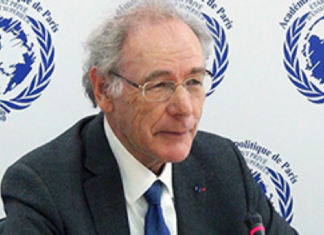
Auteur: Rector Gérard-François DUMONT
Executive summary: This text analyses the global geography of religions, emphasizing its strong geopolitical dimension. It proposes an original typology of countries according to their religious composition: uniconfessional, domi-confessional, domi-confessional contested, bi-confessionality unequal or not, or multi-confessional. Religious dynamics are the result of historical heritage, migration, conflict and public policies. The rise of “no religion” and the recomposition of migration are transforming traditional balances, particularly in Europe and America. National examples (India, Nigeria, European States, China) illustrate the impact of religious minorities on internal stability and international relations. Religion thus appears to be a structural factor in past and present geopolitical rivalries. The study does not give rise to the difficulty of accurately measuring religious affiliation and its evolution.
Keywords: Religion, Geography of Religions, Geopolitics, Religious Typology of States, Religious Diversity, Migrations, Secularization, Conflicts, Religious Minorities, Demographic Dynamics, International Relations, Africa, Asia, America, Europe.
Abstract: The text examines the global geography of religions, emphasizing its strong geopolitical dimension. It proposes a typology of countries based on religious composition: mono-confessional, dominant-confessional, contested, bi-confessional, and multi-confessional states. Religious patterns are shaped by historical legacies, migrations, conflicts, and public policies. The rise of the “non-religious” and new migration flows are reshaping traditional balances, especially in Europe and the Americas. National case studies (India, Nigeria, European states, China) show how religious minorities influence domestic stability and international relations. Religion thus emerges as a structuring factor in past and present geopolitical rivalries. The study also highlights the difficulty of accurately measuring religious affiliation and religiosity.
Keywords: Religion, Geography of religions, Geopolitics, Religious typology of states, Confessional diversity, Migration, Secularization, Conflicts, Religious minorities, Demographic dynamics, International relations, Africa, Asia, America, Europe.